

FREE SHIPPING FOR ORDERS OVER R1000! Dismiss
Skip to content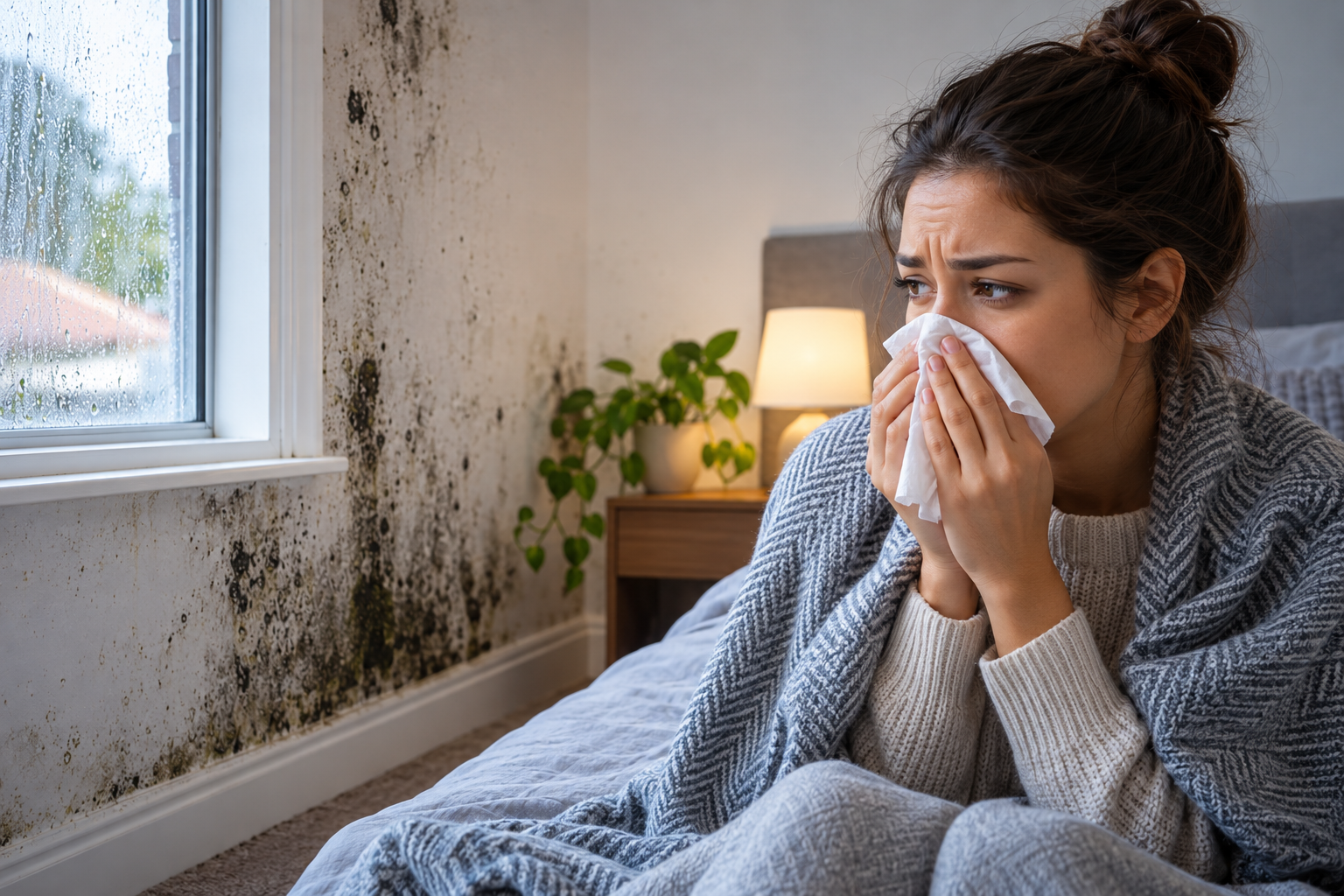
Mould is a common problem in many South African homes, particularly in bathrooms, bedrooms and areas affected by dampness or poor ventilation. While mould on walls and ceilings may initially seem like a cosmetic issue, its presence can also raise concerns about indoor air quality and health.
Thank you for reading this post, don't forget to subscribe!If you have noticed dark patches appearing around your windows, behind furniture or on bathroom walls, you may be wondering: Can mould make you sick?
The answer is yes. Exposure to indoor mould can cause allergic reactions, respiratory irritation and other symptoms in some people. However, not everyone exposed to mould experiences health problems, and the effects can vary depending on individual sensitivities and existing medical conditions.
Understanding the potential health effects of mould, recognising common symptoms and knowing how to reduce indoor exposure can help you maintain a healthier living environment.
Yes, mould can make you sick, particularly if you have allergies, asthma or a weakened immune system. Exposure to indoor mould can cause symptoms such as sneezing, coughing, a blocked nose, itchy eyes and skin irritation. Mould can also trigger or worsen asthma symptoms in susceptible individuals. Reducing moisture and removing mould safely can help limit exposure.
According to the Centers for Disease Control and Prevention (CDC), exposure to damp and mouldy environments may cause a range of health effects, although some individuals experience no symptoms at all.
The likelihood of experiencing symptoms depends on several factors, including:
It is important to understand that discovering mould in your home does not automatically mean you will become ill. However, visible mould should be addressed because ongoing dampness can encourage further growth and affect the indoor environment.
Mould is a type of fungus that grows in environments where moisture is present. It reproduces by releasing microscopic spores that can travel through the air and settle on surrounding surfaces.
Mould spores occur naturally indoors and outdoors. However, when they settle on damp materials, they may begin growing and form visible patches.
People can be exposed to mould through:
For people who are sensitive to mould, inhaling these particles may trigger an allergic response or irritate the respiratory system.
Some people may experience symptoms relatively quickly, while others may notice recurring symptoms associated with spending time in damp indoor environments.
However, symptoms alone cannot confirm mould exposure as the cause. Allergies, respiratory infections, dust mites and other indoor irritants can produce similar effects.
The symptoms of mould exposure vary between individuals. Some people experience mild irritation, while others may develop more noticeable allergic or respiratory symptoms.
One of the most commonly recognised health effects of mould exposure is an allergic response.
When someone with a mould allergy inhales fungal spores, their immune system may react to substances it identifies as allergens.
Common mould allergy symptoms include:
These symptoms can resemble seasonal allergies or hay fever.
If symptoms repeatedly occur in a particular room or building, it may be worth investigating possible indoor allergens, including mould.
Mould exposure can irritate the respiratory system, particularly in people with asthma or existing breathing conditions.
Possible symptoms include:
The World Health Organization (WHO) has identified associations between damp indoor environments, mould and increased respiratory symptoms, allergies and asthma.
People with asthma may find that exposure to damp or mouldy environments contributes to flare-ups.
Persistent coughing, wheezing or breathing difficulties should be assessed by a healthcare professional.
Headaches and fatigue are sometimes reported by people who suspect that mould is affecting their health.
However, these symptoms are nonspecific and can have many possible causes, including poor sleep, dehydration, stress, infections and other medical conditions.
Although some individuals report headaches or tiredness while living in damp environments, these symptoms alone do not establish that mould exposure is responsible.
If you regularly experience headaches or unexplained fatigue, seek medical advice rather than assuming mould is the cause.
Mould exposure may also contribute to irritation in sensitive individuals.
Possible reactions include itchy eyes, redness, watery eyes and skin irritation.
People with existing allergies may be more likely to experience these effects.
If symptoms persist or worsen, a healthcare professional can help identify possible triggers and recommend appropriate management.
| Symptom | Possible relationship to mould exposure |
| Sneezing and blocked nose | Common allergic response |
| Coughing | Possible respiratory irritation |
| Wheezing | May occur or worsen in people with asthma |
| Itchy or watery eyes | Possible allergic response |
| Skin irritation | May occur in sensitive individuals |
| Headaches | Nonspecific; other causes should be considered |
| Fatigue | Nonspecific; requires appropriate assessment |
Not everyone exposed to mould will experience these symptoms, and their presence does not necessarily mean mould is responsible.
Although anyone can experience irritation or allergic reactions, certain individuals may be more vulnerable to the effects of indoor mould.
Mould is a recognised asthma trigger for some individuals.
Exposure may contribute to coughing, wheezing, chest tightness and breathing difficulties.
People with asthma should take particular care to avoid persistent dampness and visible mould in their living environments.
Individuals who are allergic to mould may experience recurring nasal, eye or respiratory symptoms when exposed to fungal spores.
Symptoms can vary depending on the individual’s sensitivity and environmental conditions.
People with significantly weakened immune systems may be at greater risk of certain fungal infections.
This includes some individuals undergoing cancer treatment, organ transplant recipients and people taking particular immune-suppressing medications.
These individuals should avoid mould cleanup activities and seek professional advice if substantial indoor contamination is present.
Individuals with underlying lung disease may be more susceptible to complications from exposure to certain fungi.
Severe fungal infections are uncommon in otherwise healthy people but can occur in susceptible individuals.
Children and older adults may also require additional consideration, particularly when they have asthma, allergies or other underlying health conditions.
Black mould often attracts attention because of its dark appearance and its association with health concerns.
However, not all black-coloured mould is the same species, and colour alone cannot determine whether mould is more dangerous.
The term “black mould” is sometimes used to describe Stachybotrys chartarum, a fungus that can grow on certain materials exposed to prolonged moisture.
Some fungi can produce substances called mycotoxins under particular conditions. However, finding dark-coloured mould does not establish the presence of harmful toxin levels or prove that a person’s symptoms are caused by mycotoxins.
The CDC advises that identifying the exact mould species is generally unnecessary when deciding whether visible indoor mould should be removed.
Instead of focusing on colour, homeowners should address the underlying moisture problem and arrange safe cleaning or remediation.
Whether mould appears black, green, grey or white, unwanted indoor growth should not be ignored.
Mould can develop in almost any room where moisture accumulates.
The health concerns associated with mould do not depend solely on its location. However, certain areas of the home are more likely to develop persistent dampness.
Bedrooms can develop mould when condensation forms on cold walls or windows.
Common problem areas include:
Because people spend several hours sleeping in their bedrooms, persistent dampness and mould should be investigated.
If you regularly wake up with nasal congestion, coughing or irritated eyes, consider discussing your symptoms with a healthcare professional while also checking the room for possible allergens.
Bathrooms are particularly vulnerable to mould because of frequent exposure to steam and water.
Mould commonly develops around shower tiles, grout, silicone seals and ceilings.
Poor ventilation allows humid air to remain trapped, increasing the likelihood of condensation.
Using extractor fans, opening windows where practical and drying wet surfaces can help reduce these conditions.
Kitchens can develop mould around sinks, leaking pipes and poorly ventilated cupboards.
Living areas may be affected by roof leaks, rising damp or moisture entering through external walls.
In parts of South Africa, particularly regions experiencing wet winters, cold surfaces and limited ventilation can contribute to indoor condensation.
Addressing these problems early helps prevent mould from becoming a recurring household issue.
If you discover mould in your home, removing it safely and addressing the source of moisture should be your priorities.
Look for leaking pipes, roof damage, condensation, poor ventilation or water entering through walls.
Without correcting the moisture problem, mould may return after cleaning.
Small areas of mould on suitable hard surfaces can often be cleaned by homeowners.
However, extensive contamination, recurring mould or affected porous building materials may require professional remediation.
The US Environmental Protection Agency (EPA) indicates that areas smaller than approximately 0.9 square metres may often be manageable without professional assistance, depending on the circumstances.
People with asthma, significant allergies, weakened immune systems or chronic lung disease should avoid carrying out mould remediation themselves.
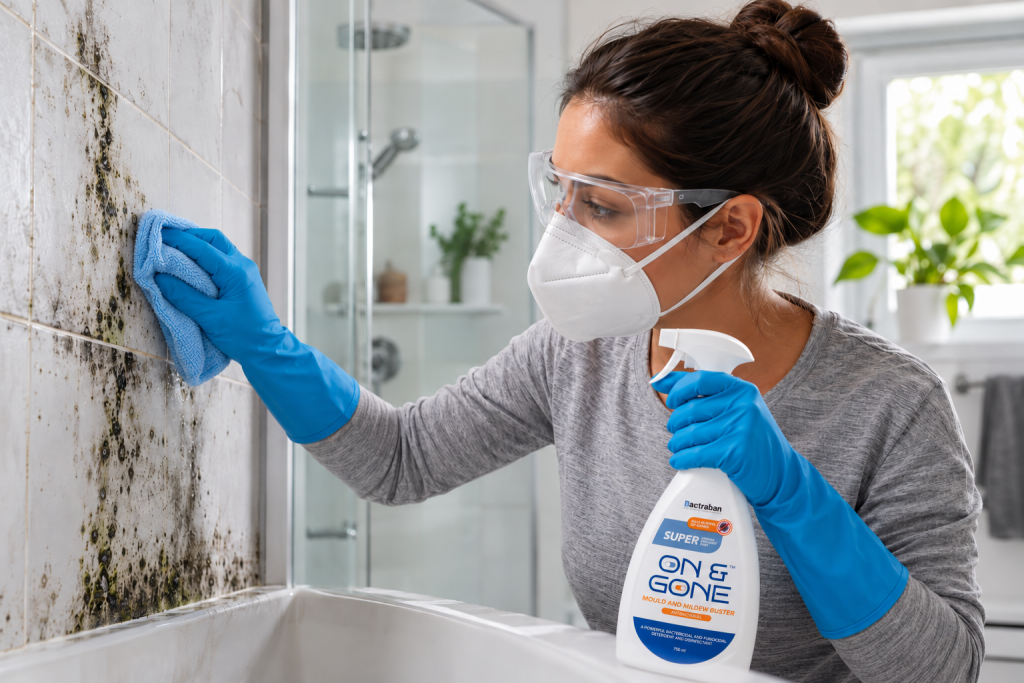
Use appropriate gloves, protective eyewear and a properly fitted N95 or equivalent particulate respirator.
Avoid dry brushing or disturbing contaminated materials unnecessarily, as this may release particles into the air.
Small patches on hard, non-porous surfaces can often be cleaned using detergent and water or an appropriate cleaning product.
Follow the manufacturer’s instructions and avoid mixing cleaning chemicals.
Bactraban offers On and Gone Mould Stain Remover for readers looking for a dedicated mould stain removal product.
Always check the product’s approved applications and surface compatibility before use.
Removing visible staining does not necessarily mean that all contamination has been removed.
Once the surface has been cleaned, allow it to dry completely.
Improve ventilation and consider using a dehumidifier where humidity remains high.
If mould covers a large area, repeatedly returns or is suspected inside walls or ceilings, professional assessment may be necessary.
For more detailed guidance, read our related article, How to Remove Mould: A Step-by-Step Guide for Your Home.
Preventing mould is largely about controlling moisture.
Even after visible mould has been removed, damp conditions can allow new growth to develop.
Open windows when weather conditions allow and use extractor fans in bathrooms and kitchens.
Allowing moist air to escape helps reduce condensation.
The EPA recommends maintaining indoor relative humidity below 60%, ideally between 30% and 50% where practical.
A hygrometer can help monitor humidity levels, while a dehumidifier may help in consistently damp rooms.
Inspect roofs, gutters, plumbing and window seals for signs of water damage.
Even minor leaks can create conditions that support mould growth.
Water-damaged materials should generally be dried within 24 to 48 hours where possible.
Dry bathroom surfaces after use and avoid leaving damp towels or clothing in poorly ventilated spaces.
Condensation commonly forms when warm, moist air meets cold surfaces.
Improving insulation, ventilation and indoor humidity control can help reduce recurring condensation.
Avoid positioning large furniture tightly against damp external walls.
Allowing air to circulate can help reduce trapped moisture behind cupboards, wardrobes and beds.
Regular cleaning helps remove dirt and visible contamination.
Suitable surface protection products may also complement a household cleaning routine, provided they are used according to their approved instructions.
Cleaning, mould stain removal and antimicrobial surface protection are related but different approaches to maintaining household surfaces.
Cleaning removes dirt, debris and visible contamination.
Mould stain removal focuses on addressing discolouration associated with mould growth.
Antimicrobial surface protection involves products designed to act against specified microorganisms on treated surfaces.
Certain antimicrobial technologies are formulated to provide residual activity after application, helping protect treated surfaces between routine cleaning activities.
However, not every antimicrobial product is effective against mould.
A treatment that has demonstrated antibacterial activity is not automatically proven to prevent fungal growth.
Bactraban provides information about antimicrobial surface protection and its AEGIS technology.
Learn more in How Bactraban’s AEGIS Technology Provides Long-Lasting Surface Protection.
For visible mould staining, homeowners can also explore Bactraban’s On and Gone Mould Stain Remover and to help prevent mould from coming back, homeowners can explore Bactraban’s AEGIS Microbe Shield.
It is important to follow each product’s approved instructions and confirm that it is suitable for the intended surface and application.
No antimicrobial surface treatment should be considered a substitute for proper mould removal, regular cleaning or moisture control.
If you suspect mould exposure is affecting your health, a healthcare professional can help assess your symptoms and investigate possible causes.
Seek medical advice if you experience:
Seek urgent medical attention if you experience severe breathing difficulties.
A doctor may assess your medical history, symptoms and possible environmental triggers. Allergy testing or other investigations may be appropriate in some cases.
Because many symptoms associated with mould exposure can have other causes, avoid self-diagnosing a mould-related illness.
Some people experience no noticeable symptoms when exposed to indoor mould. Others may develop mild allergic or respiratory symptoms that resemble common allergies. The absence of symptoms does not mean a moisture problem should be ignored. Visible mould should still be addressed to prevent further growth and deterioration of affected materials.
There is no single timeframe for developing symptoms after mould exposure. People with mould allergies may react relatively quickly, while others may experience delayed, recurring or no symptoms. The response depends on individual sensitivity and exposure circumstances. Persistent symptoms should be discussed with a healthcare professional.
Headaches and fatigue are sometimes reported by people concerned about indoor mould. However, these symptoms are nonspecific and do not reliably indicate mould exposure. Many medical and environmental factors can cause similar symptoms. If headaches or fatigue persist, seek medical advice to identify possible causes.
Sleeping in a room with mould may expose you to airborne fungal particles. People with mould allergies or asthma may experience symptoms such as nasal congestion, coughing or wheezing. Not everyone will be affected. Address visible mould and moisture problems, particularly in bedrooms where people spend extended periods.
Black mould is not automatically more dangerous than mould of another colour. Different fungal species can appear dark, and appearance alone cannot establish health risk. Visible indoor mould should be removed safely regardless of its colour, while the moisture source should be identified and corrected.
Yes. Mould exposure can contribute to respiratory irritation and trigger asthma symptoms in susceptible individuals. Possible effects include coughing, wheezing and chest tightness. People with existing respiratory conditions may be more vulnerable. Persistent breathing problems require medical assessment, and severe breathing difficulties require urgent attention.
Reducing exposure to mould may help improve allergy or irritation symptoms in some people. However, improvement varies, and symptoms may persist because of underlying allergies, asthma or other medical conditions. Removing mould does not guarantee immediate recovery. Seek medical advice if symptoms continue after the environment has been addressed.
So, can mould make you sick? Yes, indoor mould exposure can cause allergic reactions, respiratory irritation and worsening asthma symptoms in some individuals.
However, the effects vary, and not everyone exposed to mould will experience health problems.
The most practical approach is to address visible mould, identify the source of moisture and take steps to prevent recurring dampness.
Improving ventilation, repairing leaks, controlling humidity and maintaining a regular cleaning routine can all help create a healthier indoor environment.
If you’re concerned about mould in your home, explore Bactraban’s cleaning and surface protection solutions to learn more about maintaining cleaner household surfaces.
For information about suitable products and their applications, contact Bactraban.
Mould is a common household problem, especially in areas exposed to moisture, condensation and poor…
Mould is a common problem in many South African homes, particularly in bathrooms, bedrooms and…

Thank you for reading this post, don't forget to subscribe! When you walk into a…

As South Africa’s cannabis industry expands, ensuring product safety and quality is critical. With cannabis…
Are You A Business User, Or Would You Like To Become A BACTRABAN Retailer, Wholesale Partner, Or Subcontractor?
For trade pricing and commercial enquiries please contact us using the form below.
Bactraban South Africa is currently looking to source a select number of wholesale partners in the industrial trade, B2B and retail space. If you believe that Bactraban’s product range or certain products could be a good fit for your business, please submit an enquiry today.
Industries of interest include air conditioning maintenance and servicing, air quality specialists, mould remediation and deep cleaning service providers, and FMCG retailers. All enquiries are welcome!