

FREE SHIPPING FOR ORDERS OVER R1000! Dismiss
Skip to content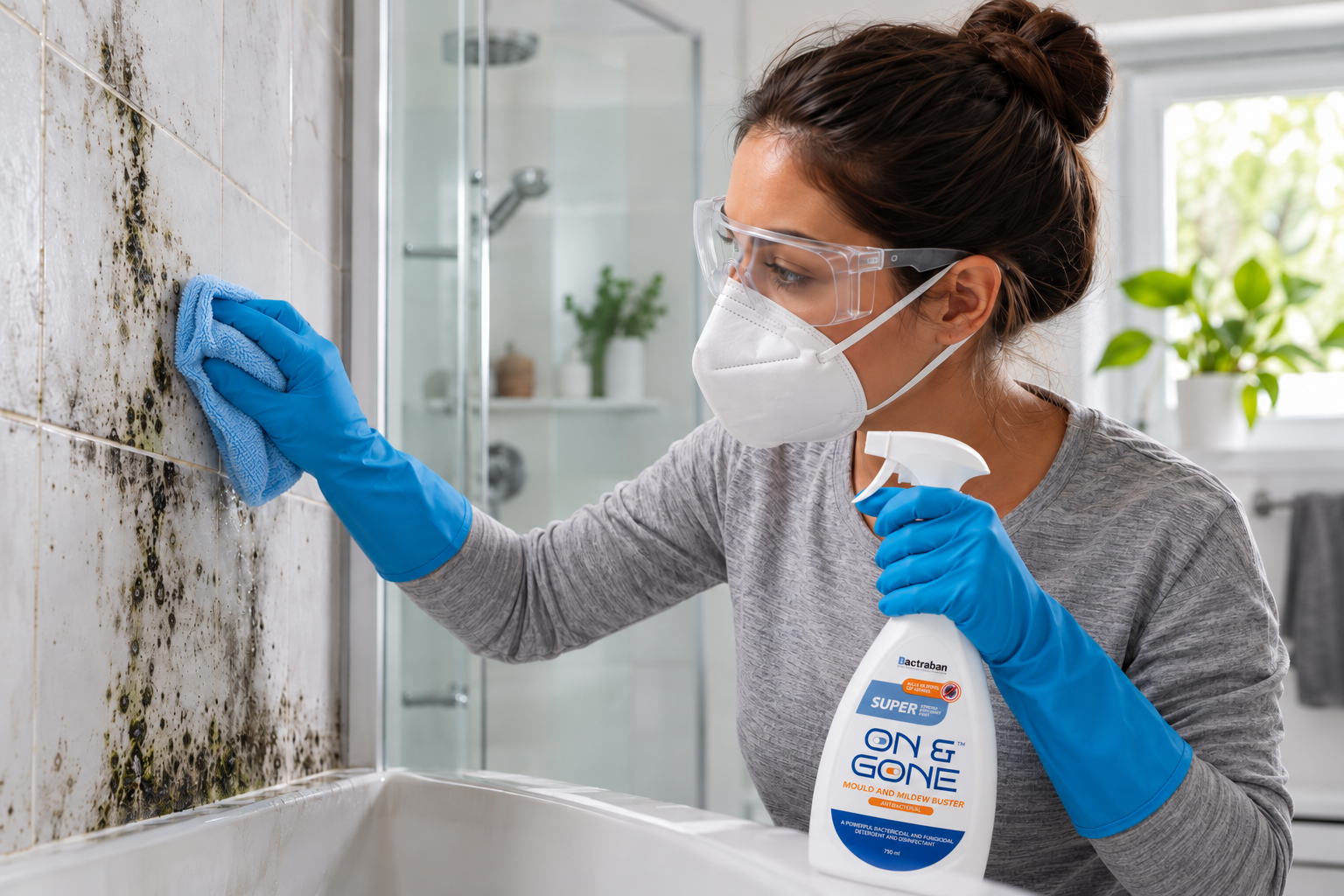
Mould is a common household problem, especially in areas exposed to moisture, condensation and poor ventilation. Whether you’ve noticed black patches on your bathroom ceiling, mould growing behind furniture or dark spots appearing on your walls, dealing with it early can help prevent the problem from spreading.
Thank you for reading this post, don't forget to subscribe!For homeowners and tenants in South Africa, mould can become particularly troublesome during wetter winter months, when cold surfaces and limited ventilation create favourable conditions for fungal growth.
Knowing how to remove mould safely is important, but cleaning the affected area is only part of the solution. Understanding what causes mould and taking steps to control moisture can help prevent it from returning.
To remove mould, first identify and fix the source of moisture. Small areas on suitable hard surfaces can often be cleaned using an appropriate cleaning solution while wearing protective equipment. Dry the area thoroughly, improve ventilation and control humidity to reduce the risk of mould returning. Extensive or recurring mould may require professional remediation.
Mould is a type of fungus that grows in damp environments. It reproduces by releasing microscopic spores into the air, which can settle on surfaces and begin growing when sufficient moisture is present.
Although mould spores naturally exist indoors and outdoors, persistent moisture allows them to develop into visible patches.
Mould commonly appears as black, green, grey or white discolouration. It may have a fuzzy, powdery or slimy appearance and is sometimes accompanied by a musty smell.
Several factors can contribute to mould growth:
In South Africa, mould can be especially noticeable during winter in regions such as the Western Cape, where seasonal rainfall and cooler temperatures may contribute to damp indoor conditions.
Beyond damaging paint, plaster and furnishings, exposure to mould can cause irritation or allergic symptoms in some people, particularly those with asthma, allergies or respiratory sensitivities.
Removing mould effectively requires more than wiping away visible stains. The goal is to remove the contamination while addressing the conditions that allowed it to develop.
Before cleaning, determine why the mould appeared.
Check for leaking pipes, damaged roof tiles, condensation around windows and poor ventilation. If the affected wall feels consistently damp, investigate whether water is entering through the building structure.
Cleaning mould without fixing the moisture problem often results in it returning.
For example, removing mould from a bathroom ceiling will offer limited long-term improvement if steam continues to accumulate after every shower.
Small, localised patches on suitable hard surfaces can often be cleaned by homeowners.
However, mould covering a large area, recurring growth or contamination involving water-damaged porous materials may require professional assistance.
As a general guideline, the US Environmental Protection Agency (EPA) indicates that mould affecting an area smaller than approximately 0.9 square metres may often be manageable without professional remediation, depending on the circumstances.
This is not a guarantee that every small mould problem is safe to clean yourself.
If you have asthma, a weakened immune system, chronic lung disease or another condition that increases your risk from mould exposure, avoid carrying out mould remediation yourself.
Before beginning, protect yourself from direct contact with mould and airborne particles.
Recommended precautions include:
Avoid dry brushing or sanding mouldy surfaces, as these activities can release particles into the air.
Never mix bleach with ammonia, acids, vinegar or other cleaning chemicals, as dangerous gases can form.
For small areas of mould on hard, non-porous surfaces, cleaning with detergent and water is often an appropriate starting point.
For stubborn discolouration, a dedicated mould stain remover may help improve the appearance of the affected surface.
Bactraban offers On and Gone Mould Stain Remover, which readers can explore when looking for a dedicated mould stain removal product. Scrubbing the affected surface may not even be necessary when using specialised products such as On & Gone.
Always check the manufacturer’s instructions, surface compatibility and safety precautions before use.
Important: Removing a visible stain does not necessarily mean that all mould contamination has been removed or that the underlying moisture problem has been resolved.
After cleaning, ensure the surface dries completely.
Open windows where practical, improve ventilation and use a dehumidifier if necessary.
Avoid painting over a mouldy or damp surface. Painting without addressing the underlying problem can trap moisture and allow mould to develop beneath the new coating.
Once the surface is clean and dry, continue monitoring the area for signs of recurring moisture.
Different household surfaces require different cleaning approaches. The method suitable for bathroom tiles may not be appropriate for painted plaster, ceilings or upholstered furniture.
Mould on walls commonly develops where condensation collects, especially behind wardrobes, beds and furniture positioned against external walls.
For small patches on sound, washable painted surfaces:
If the wall is soft, crumbling, peeling or heavily water-damaged, cleaning alone may not be sufficient.
Porous materials such as plasterboard can become contaminated beneath the visible surface and may need professional assessment or replacement.
Bathrooms provide favourable conditions for mould because of frequent exposure to warm water, steam and condensation.
Mould often appears around shower corners, grout lines, silicone seals and areas surrounding baths.
To clean mould from bathroom tiles:
If mould has penetrated damaged silicone sealant, replacing the affected sealant may be necessary.
Regularly drying shower walls and keeping extractor fans working can help reduce recurring moisture.
Ceiling mould often develops in bathrooms, kitchens and poorly insulated rooms where warm, humid air meets colder surfaces.
Small patches on sound, washable ceilings may be cleaned carefully using an appropriate cleaning solution.
However, overhead cleaning presents additional risks, including liquid dripping into the eyes and the possibility of falls when using ladders.
Avoid saturating ceiling materials. If the ceiling is damaged, sagging or extensively contaminated, seek professional assistance.
Improving ventilation and investigating roof leaks or condensation problems are essential for preventing the mould from returning.
Mould can also affect wardrobes, mattresses, curtains, carpets and upholstered furniture.
Hard furniture surfaces may be cleanable, depending on the material and finish.
Porous materials are more challenging because mould can penetrate beneath the surface.
Items that are extensively contaminated, remain damp or cannot be cleaned and dried thoroughly may need specialist treatment or disposal.
Move furniture away from damp walls where possible to improve airflow and reduce trapped moisture.
Once mould has been removed, prevention becomes the priority.
Because mould needs moisture to grow, controlling indoor dampness is one of the most effective ways to reduce future problems.
Open windows when weather conditions allow and use extractor fans in bathrooms and kitchens.
Allow ventilation to continue after showering or cooking to help remove excess moisture.
The EPA recommends keeping indoor relative humidity below 60%, ideally between 30% and 50% where practical.
A hygrometer can help you monitor humidity levels.
In consistently damp rooms, a dehumidifier may help reduce moisture in the air.
Inspect roofs, gutters, plumbing and window seals for signs of water entering the building.
Even small leaks can create persistent damp conditions that encourage mould growth.
Wipe condensation from windows, dry bathroom surfaces and avoid leaving wet towels or clothing in poorly ventilated rooms.
Where water damage occurs, drying affected materials within approximately 24 to 48 hours can help reduce the risk of mould growth.
Avoid positioning large wardrobes and other furniture tightly against cold, damp external walls.
Allowing air to circulate can help reduce condensation and moisture accumulation.
Some antimicrobial surface treatments are designed to provide ongoing protection against specified microorganisms on treated surfaces.
However, their effectiveness depends on the formulation, the organisms covered by the product’s approved claims and the conditions of use.
Antimicrobial surface protection should complement regular cleaning and moisture management rather than replace them.
Advanced technologies, such as AEGIS Microbe Shield, are engineered to bond to treated surfaces, creating a durable, invisible barrier that inhibits microbial growth between routine cleanings.
Cleaning and antimicrobial surface protection serve different purposes.
Cleaning focuses on removing dirt, visible contamination and unwanted material from a surface.
Antimicrobial surface treatments are formulated to act against specified microorganisms. Certain technologies are designed to remain active on treated surfaces after application, providing protection between routine cleaning activities.
| Cleaning | Antimicrobial surface protection |
| Removes visible dirt and contamination | Targets specified microorganisms on treated surfaces |
| Requires regular repetition | Some formulations provide residual activity |
| Helps remove existing mould from suitable surfaces | May provide additional protection where the product is specifically approved for fungal control |
| Does not fix underlying moisture problems | Does not fix underlying moisture problems |
| Forms part of routine hygiene | Complements cleaning when appropriately used |
Bactraban provides information about antimicrobial technology and long-lasting surface protection.
To understand how its technology works, read Long-Lasting Surface Protection: How Bactraban’s AEGIS Technology Keeps Spaces Safer Between Cleanings.
It is important to distinguish antibacterial claims from antifungal claims. A product shown to act against bacteria is not automatically proven effective against mould.
Before choosing any antimicrobial product for mould-related purposes, confirm that its approved label specifically supports the intended application.
Even with additional surface protection, controlling moisture remains essential.
Although small mould patches may be manageable, some situations require specialist attention.
Consider professional mould remediation when:
Professional remediation may involve moisture investigation, containment, removal of contaminated materials and structural drying.
Addressing the underlying cause is essential to achieving a lasting result.
The best approach depends on the wall material and extent of contamination. Small patches on sound, washable surfaces can often be cleaned with detergent and water or an appropriate cleaning product. Fix the moisture source and dry the wall thoroughly. Damaged plasterboard or extensive contamination may require professional remediation.
Vinegar may help with some superficial mould contamination on certain surfaces, but it does not guarantee permanent removal. Its effectiveness varies, and it may damage some materials. Mould can return if moisture remains. Fixing leaks, reducing humidity and improving ventilation are more important for long-term prevention.
Bleach can act against certain microorganisms on suitable surfaces, but it is not generally necessary for routine mould cleanup. It may not effectively address contamination embedded in porous materials. Never mix bleach with other cleaning chemicals, and always follow the manufacturer’s instructions.
Black-coloured mould should be approached using the same basic precautions as other indoor mould growth. Colour alone cannot identify the mould species or determine its health risk. For small patches on suitable hard surfaces, use protective equipment and an appropriate cleaning method. Extensive contamination should be assessed professionally.
Mould commonly returns because the underlying moisture problem has not been resolved. Condensation, poor ventilation, water leaks and high humidity can allow new growth to develop. Long-term prevention requires addressing these conditions rather than repeatedly removing visible stains.
Some antimicrobial products are specifically formulated and tested to inhibit fungal growth on treated surfaces. However, not all antimicrobial treatments provide protection against mould. Check the product’s approved claims and instructions. No surface treatment should be considered a substitute for removing existing mould and controlling moisture.
Knowing how to remove mould is an important part of maintaining a cleaner, healthier indoor environment.
Whether you’re dealing with mould on bathroom tiles, bedroom walls or ceilings, the most effective approach combines safe cleaning, thorough drying and moisture control.
Start by identifying the cause, clean affected surfaces using suitable methods and take practical steps to improve ventilation and reduce humidity.
For additional information about surface hygiene and antimicrobial technologies, explore Bactraban’s surface protection solutions.
If you’re looking for a dedicated product to address visible mould staining, learn more about Bactraban On and Gone Mould Stain Remover.
For product-specific advice, contact Bactraban to find out which solutions may be appropriate for your surfaces and cleaning requirements.
Mould is a common household problem, especially in areas exposed to moisture, condensation and poor…
Mould is a common problem in many South African homes, particularly in bathrooms, bedrooms and…

Thank you for reading this post, don't forget to subscribe! When you walk into a…

As South Africa’s cannabis industry expands, ensuring product safety and quality is critical. With cannabis…
Are You A Business User, Or Would You Like To Become A BACTRABAN Retailer, Wholesale Partner, Or Subcontractor?
For trade pricing and commercial enquiries please contact us using the form below.
Bactraban South Africa is currently looking to source a select number of wholesale partners in the industrial trade, B2B and retail space. If you believe that Bactraban’s product range or certain products could be a good fit for your business, please submit an enquiry today.
Industries of interest include air conditioning maintenance and servicing, air quality specialists, mould remediation and deep cleaning service providers, and FMCG retailers. All enquiries are welcome!