Hospitals are meant to be safe havens for healing, yet they can sometimes become breeding grounds for deadly pathogens. The case of Hospital Sultan Ismail in Malaysia highlights the devastating impact of fungal contamination in healthcare facilities. Within just two months of opening, the hospital became infested with Aspergillus fumigatus, a highly dangerous fungus known for causing respiratory infections, particularly in immunocompromised patients.
Thank you for reading this post, don't forget to subscribe!
This article delves into the remediation process, preventative strategies, and how the application of AEGIS antimicrobial technology helped reclaim a contaminated hospital environment.
The Devastating Impact of Hospital Fungal Contamination
Fungi like Aspergillus fumigatus thrive in warm, moist environments and can easily spread through air and surfaces. In the case of Hospital Sultan Ismail, investigations revealed:
- Extensive visible fungal growth across all ten floors of the hospital.
- Airborne fungal counts exceeding 1,000 CFU/m³ (colony-forming units per cubic meter), far surpassing safe limits.
- Moisture accumulation in building materials, creating ideal conditions for microbial growth.
This level of contamination posed severe risks, including nosocomial infections, respiratory distress, and increased mortality rates among immunocompromised patients.
The Challenge of Fungal Remediation in Large Facilities
Traditional cleaning and disinfection methods have limited effectiveness in controlling fungal outbreaks in hospitals. Standard disinfectants:
- Only work temporarily, leaving surfaces vulnerable to recontamination.
- Do not address airborne spores, which continue to circulate through HVAC systems.
- Cannot penetrate porous materials, allowing fungi to persist in hidden areas.
A long-term solution was needed — one that not only removed existing fungal contamination but also prevented regrowth.
The AEGIS Solution: A Long-Lasting Antimicrobial Shield
To combat the contamination, the AEGIS Microbe Shield was selected as the primary antimicrobial treatment. Unlike conventional disinfectants, AEGIS forms a durable, non-leaching antimicrobial layer on surfaces, continuously destroying microbes without needing constant reapplication.
Remediation Steps Taken at Hospital Sultan Ismail
Environmental Investigation
- Advanced microbial sampling methods were used to measure airborne and surface fungal counts across all 307 sites.
- Infrared scanning identified hidden moisture pockets, allowing targeted decontamination.
Fungal Removal and Surface Cleaning
- Contaminated materials were completely removed where necessary.
- High-efficiency particulate air (HEPA) vacuuming and damp wiping eliminated fine dust particles and fungal spores.
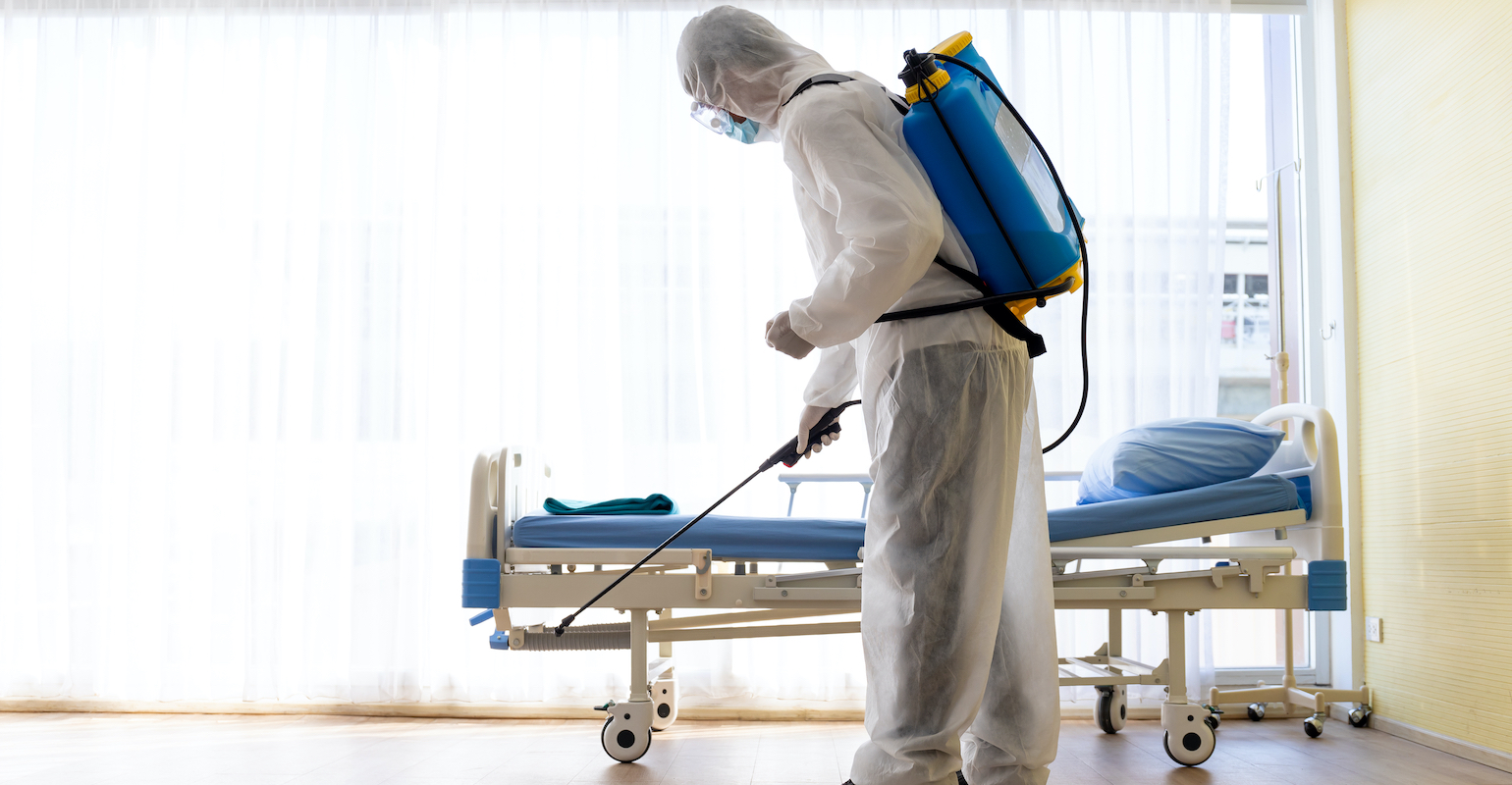
- Fogging with Ox Bio+ solution was used for deep decontamination.
Application of AEGIS Microbe Shield
- All hospital surfaces—including walls, ceilings, furniture, HVAC systems, and medical equipment—were coated with AEGIS antimicrobial technology.
- The chemically bonded organosilane layer prevented fungi from re-establishing on treated surfaces.
The Results: A Dramatic Reduction in Fungal Contamination
The post-treatment assessment showed remarkable improvements:
88% reduction in airborne fungal counts across all floors.
Some areas reported 0 CFU/m³, indicating complete fungal elimination.
Long-term suppression of microbial growth even five months post-treatment.
Pre-treatment fungal levels: 791.4 CFU/m³ (average across 307 sample sites).
Post-treatment fungal levels: 96.6 CFU/m³ (average after five months).
These results demonstrated that AEGIS provided an effective, long-term antimicrobial solution — making the hospital a safer environment for patients and staff.
Why Every Healthcare Facility Needs Proactive Fungal Protection
The case of Hospital Sultan Ismail serves as a critical lesson for healthcare administrators worldwide. Preventative antimicrobial strategies are no longer optional — they are essential.
Key Takeaways for Hospital Administrators:
- Implement environmental monitoring to detect moisture buildup and microbial growth early.
- Use durable antimicrobial technologies like AEGIS to provide long-lasting protection.
- Regularly clean and maintain HVAC systems to prevent airborne fungal spread.
- Ensure all surfaces — including hard-to-reach areas — are properly treated to eliminate microbial reservoirs.
- Educate hospital staff on the importance of biosecurity and infection control protocols.
Conclusion: The Future of Infection Control in Hospitals
With rising concerns over hospital-acquired infections (HAIs) and antimicrobial resistance, traditional disinfectants alone are no longer enough. Innovative antimicrobial technologies like AEGIS offer a long-lasting, non-toxic, and highly effective solution for hospital hygiene.
The success at Hospital Sultan Ismail proves that proactive fungal prevention strategies can save lives, protect patients, and reduce long-term maintenance costs.
For healthcare facilities looking to safeguard their environments, AEGIS antimicrobial treatment is the future of hospital hygiene.