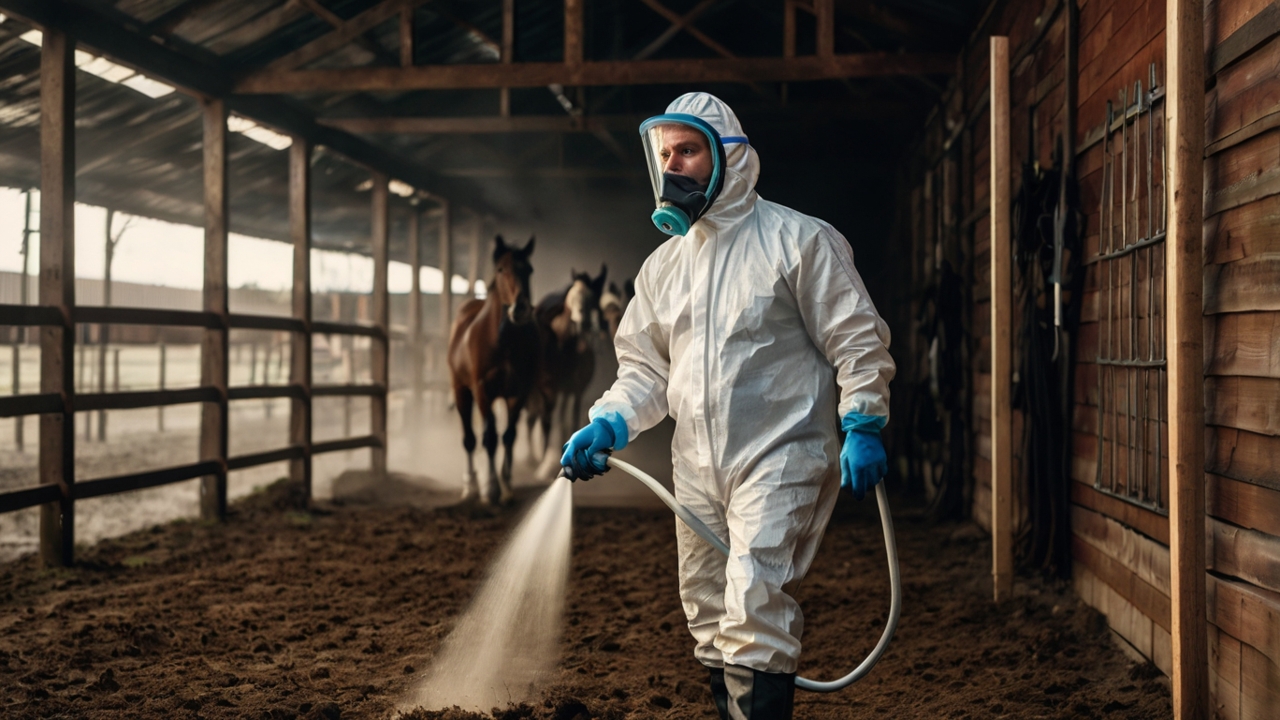
Equine strangles is one of the most contagious and concerning bacterial infections in horses. Caused by Streptococcus equi equi, it leads to painful abscesses in the lymph nodes, fever, nasal discharge, and in severe cases, life-threatening complications. The disease can spread rapidly through direct contact, contaminated surfaces, and shared equipment. Controlling and preventing outbreaks is a top priority for horse owners, trainers, and stable managers.
Thank you for reading this post, don't forget to subscribe!
Understanding the Spread of Strangles
Strangles is primarily transmitted in two ways:
- Direct Contact: Horses can contract the infection from an infected horse through nasal secretions, coughing, or shared feed and water sources.
- Indirect Contact: The bacterium can survive in the environment for extended periods on surfaces such as stable walls, feed buckets, and grooming tools. Human handlers can also unknowingly spread the disease through clothing, hands, and equipment.
Given the ease of transmission, an outbreak can be costly and disruptive, requiring strict quarantine measures, restricted movement, and extensive disinfection procedures.
The Economic Impact of Strangles
Managing a strangles outbreak is not just about ensuring the health of horses but also about mitigating financial losses. Quarantine measures can disrupt training schedules, competitions, and horse sales, leading to revenue loss. Veterinary costs, treatment expenses, and additional labour for cleaning and disinfecting facilities can further strain resources.
Complications of Strangles
While most horses recover with proper care, some severe cases can lead to dangerous complications such as:
- Bastard Strangles: The infection spreads beyond the lymph nodes, forming abscesses in internal organs.
- Purpura Haemorrhagica: An immune-mediated response causing swelling, bleeding, and sometimes fatal consequences.
Preventing Strangles: AEGIS® Microbe Shield
Preventative measures such as biosecurity protocols, vaccination, and stringent hygiene practices are essential in reducing the risk of strangles. One of the most promising innovations in equine biosecurity is AEGIS® Microbe Shield, an advanced antimicrobial technology designed to provide long-lasting surface protection against bacteria, mould, fungi, and other pathogens.
AEGIS® is a quaternary silane-based antimicrobial coating that creates a colourless, odourless layer on surfaces. Unlike traditional disinfectants that require frequent application, AEGIS® remains active for up to a year, continuously killing microbes on contact.
How AEGIS® Works in Equine Care
When applied to high-contact surfaces such as water troughs, feed buckets, stable walls, grooming equipment, and riding gear, AEGIS® forms a durable, protective barrier that prevents microbial growth. This is especially important in stopping asymptomatic carriers from unintentionally spreading the disease to healthy horses.
Key benefits of AEGIS® Microbe Shield include:
✔ Long-lasting Protection – A single application can provide antimicrobial defence for up to 12 months.
✔ Safe and Non-Toxic – Does not leach, cause odours, or pose a risk to horses or handlers.
✔ Cost-Effective – Reduces the need for frequent disinfection, saving time and resources.
✔ Prevents Recontamination – Continues to work between cleanings, unlike traditional disinfectants that only kill bacteria at the time of use.
Simple and Effective Application
Applying AEGIS® is straightforward. It can be sprayed onto surfaces using a standard applicator, requiring minimal effort. Once dried, it forms a protective shield that actively combats microbial contamination.
Conclusion: A Smarter Approach to Strangles Prevention
AEGIS® Microbe Shield represents a significant advancement in equine health and biosecurity. By integrating this antimicrobial technology into stable management routines, horse owners can proactively prevent the spread of equine strangles rather than simply reacting to outbreaks. With continued innovation and adoption of such protective solutions, the equine community can ensure safer, healthier environments for their horses.
For more information on AEGIS® and how it can help protect your stable, speak to one of our consultants today